
ESTABLISHED IN 1992
Hotel public areas often need simpler thermostat controls than guest rooms. Meeting rooms, fitness areas, lobbies, corridors, and shared spaces can benefit from controls that limit unnecessary adjustments while maintaining comfort.
HotelTech specifies public area thermostat controls based on your HVAC system, space, and control requirements.
Public area thermostat controls are designed for shared hotel spaces used by staff, guests, and visitors throughout the day. Simple, durable controls can help manage comfort while reducing unnecessary adjustments.

Public area controls may be considered for:
The right hotel common area thermostat should provide practical temperature control without exposing unnecessary settings or making operation difficult for staff.
In public areas, complicated or unrestricted thermostat controls can lead to frequent adjustments and accidental changes. Simplified controls can make shared spaces easier to manage.
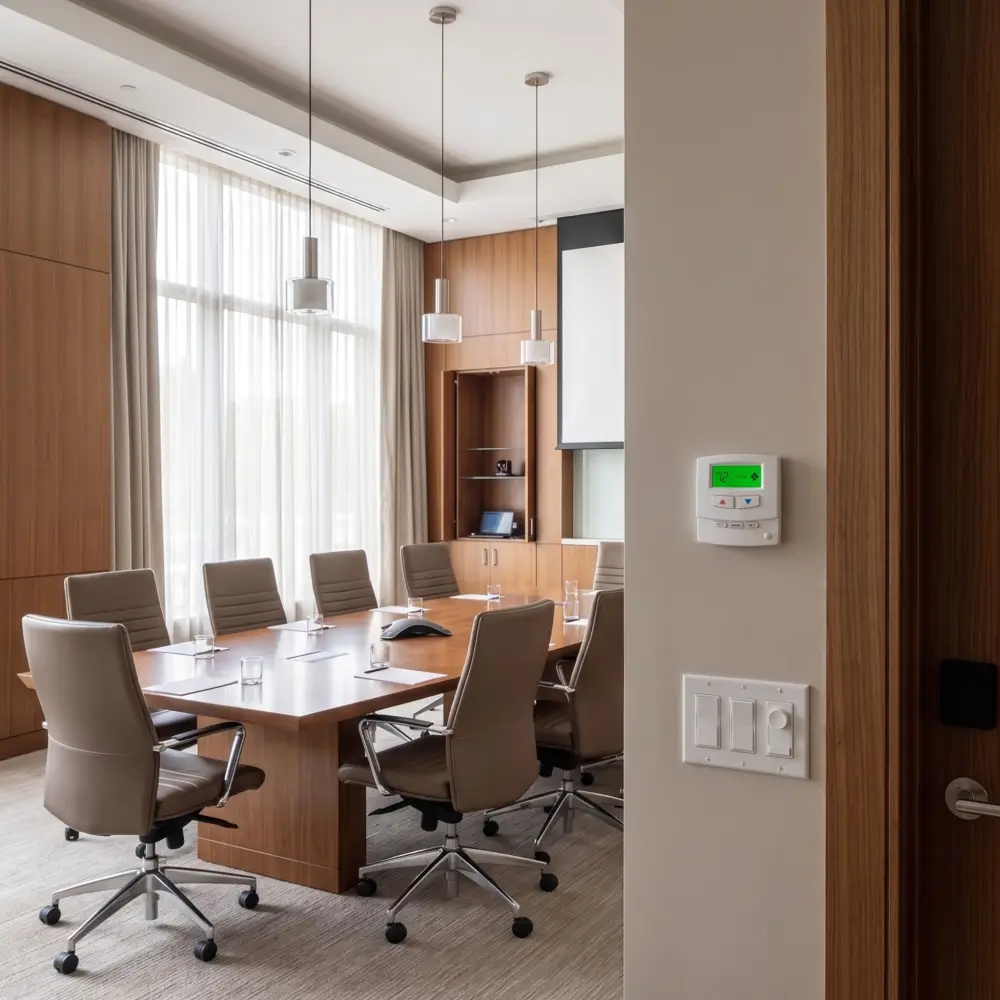
Depending on the application, simplified common area HVAC controls can help hotels:
The appropriate control strategy depends on the HVAC equipment, space, and level of access your property requires.
Different public areas have different occupancy patterns and control requirements. HotelTech can help review each application rather than assuming the same thermostat configuration should be used throughout the property.
A thermostat for hotel meeting rooms can give staff practical temperature control while limiting unnecessary adjustments. Simplified controls, protected settings, or energy-management features may be considered depending on the HVAC system.
A thermostat for hotel gyms should be durable, easy to manage, and compatible with the HVAC system. Motion sensing or setback may also be considered for spaces with changing occupancy.
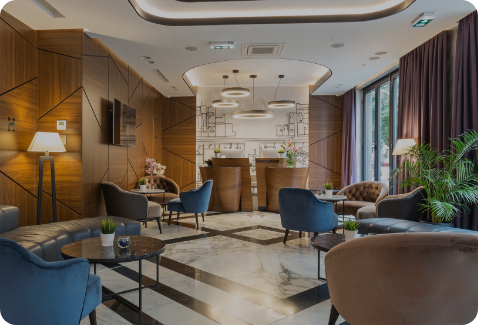
Lobbies, lounges, and amenity spaces need reliable comfort without unrestricted thermostat access. Simplified controls can help staff manage temperatures while limiting unnecessary adjustments.
Corridors and hallways typically require limited thermostat interaction. Controls can focus on straightforward operation, protected settings, and HVAC compatibility.
Staff and back-of-house spaces may benefit from simple controls that are easy to operate. HotelTech can help match the thermostat configuration to the HVAC equipment and space requirements.
A guest room thermostat generally needs intuitive controls that allow guests to make comfortable temperature adjustments during their stay. Public area controls are more likely to prioritize shared use, limited interaction, durability, and staff-managed operation.
Depending on the application, options may include:
The correct product depends on the HVAC system, voltage, wiring, space, and required functionality, so compatibility should be confirmed before a model is selected.
Some shared spaces may benefit from a simplified or two-button thermostat for hotels, providing straightforward temperature adjustment while limiting access to unnecessary settings. HotelTech can help determine the appropriate controls based on the HVAC system and application.
Public areas may use different HVAC equipment or control configurations than guest rooms elsewhere in the same property. A thermostat that works in one part of the hotel should not automatically be assumed to work in another.
Before selecting public area thermostat controls, confirm:
Photos of the existing thermostat, wiring, and HVAC equipment can also help when reviewing an application.
Shared spaces with changing occupancy may also benefit from energy-management features such as temperature limits, protected settings, motion-based setback, or networkable controls. Learn more about guestroom energy management thermostats and how these strategies may apply to shared areas.
HotelTech can help hotel teams, contractors, and engineers with HVAC compatibility, model selection, programming, and public area requirements, with additional technical guidance available through HotelTech thermostat support.
Public area thermostat controls are thermostat solutions used in shared hotel spaces such as meeting rooms, fitness centres, lobbies, corridors, amenity areas, and staff spaces. They can provide simplified or protected control depending on the application.
They can be. Guest room thermostats generally prioritize intuitive guest-facing temperature adjustment, while public area controls may prioritize simplified access, durability, protected settings, or staff-managed operation.
Yes. Depending on the thermostat and configuration, simplified controls and protected settings can reduce accidental or unnecessary adjustments in spaces used by many different people.
The appropriate thermostat depends on the meeting room’s HVAC equipment, voltage, wiring, occupancy patterns, and desired level of user access. HotelTech can review these details before recommending an option.
Yes. HotelTech can review thermostat options for hotel fitness areas based on the HVAC system, control requirements, occupancy patterns, and whether features such as motion-based setback are required.
Depending on the thermostat and configuration, settings or controls may be simplified or protected to provide the level of access required for the space.
Depending on the model and application, hotels may be able to use features such as temperature limits, programmed settings, motion-based setback, or networkable controls as part of an energy-management strategy.
Yes. HotelTech can help review thermostat requirements across guest rooms, public areas, and other hotel spaces. Different HVAC systems or applications may require different thermostat models or configurations.
Provide the space type, HVAC equipment, voltage, existing thermostat information, desired controls, number of spaces, required quantity, and project timeline. Photos of the thermostat, wiring, and HVAC equipment may also help with compatibility review.
No. HotelTech Public Area Thermostats are built so the cover box is unnecessary.
Not if you spec the public-area configuration with no power button.
HotelTech can help identify the right thermostat controls for meeting rooms, gyms, lobbies, corridors, staff areas, and other shared hotel spaces.
Request A Quote